
At Clarendon Vale Primary School, a kitchen garden initiative is helping students grow more than fruit and vegetables. It’s also helping their language skills flourish.
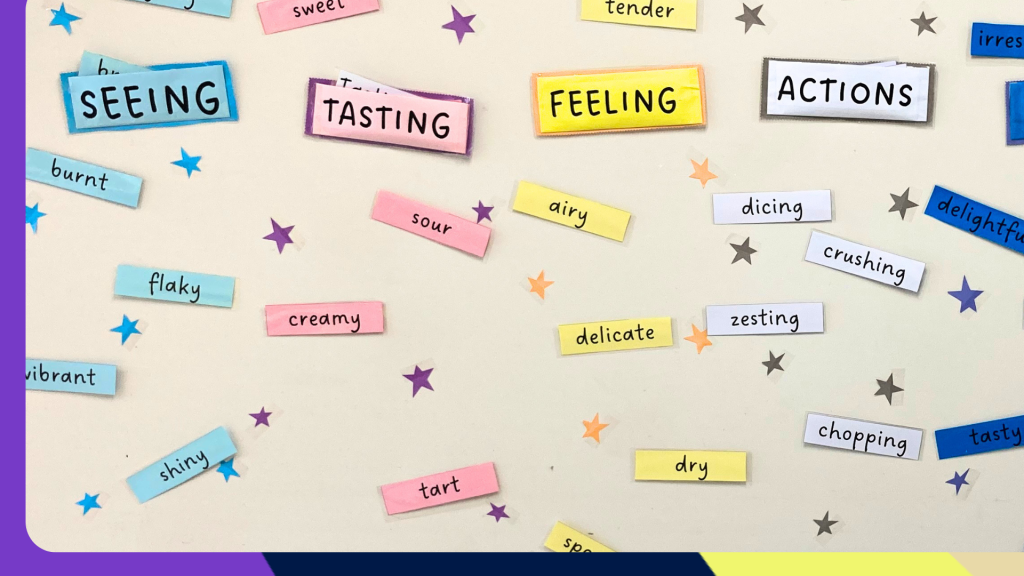
Senior Speech and Language Pathologist Ruth Hodgson has worked with school staff and University of Tasmania (UTAS) students on the Kitchen, Lunch and Oral Language program. It connects hands-on learning with vocabulary and oral language development.
It also creates natural opportunities for students to:
- talk
- share ideas
- build their confidence through supported conversations.
Organic learning opportunities
Ruth and UTAS students developed a list of ‘Tier 2’ words. Words students often find in books, but may not hear in everyday conversation.
The words are shown in the school’s kitchen and garden. They encourage students to use them while learning and working together.
Ruth shares, “Some of the biggest learning moments happen through everyday conversations. Seeing students use new words with confidence, share their ideas and connect with others is incredibly rewarding.”
Students choose a new word to take back to the classroom, where they use it during sharing sessions. Using new words in different settings helps students build their communication skills.
The results speak for themselves
- Students achieving at or above expected levels in English and Reading increased from 33.3% in 2025 to 42.3% in 2026.
- Students making progress increased from 36.7% to 63.4%.
- Kindergarten students achieved 100% in oral language measures.
- The program supports students who need extra language support in their everyday classroom.
These school-wide results reflect the collective efforts of staff, students and their families.
For Ruth, the impact reaches far beyond vocabulary lists and garden beds. It’s about helping children feel confident and included.
Creating possibility
As we celebrate Speech Pathology Week (23 to 29 August 2026), we thank our speech and language pathologists across DECYP.
They support children and young people to learn, participate and thrive. By working closely with school communities, they help create brighter futures for students.